Cross-border succession law · Spain
Someone you love has died,with property in Spain.We handle everything.
English & Irish solicitor · for inheritance in Spain
Losing someone is hard enough without a foreign legal system and in another language. We take care of the whole Spanish side for you — remotely, under a power of attorney, so you never need to travel — for a fixed fee agreed before we start. Every matter is signed off personally by Colin Carroll, a lawyer of 20 years’ standing.
A Spanish estate on your desk? Keep your client — send us the Spanish leg.
For solicitors & professional advisers
Where are you right now?
Two clear paths — choose the one that fits:

🕊 Someone has died.
We handle the whole Spanish side: who inherits, accepting and adjudicating the estate, releasing the accounts, registering the property in the heirs’ names — and selling it later if you wish.
After a death →

🌱 No one has died — yet.
Planning ahead. Protect your family before anything happens: who would inherit today, a Spanish will, what your marriage means for inheritance, and whether your UK trust still works in Europe. Tell us what you’d like to protect and we’ll guide you.
Planning ahead →
1888
a family of lawyers — almost 140 years
4
countries in southern Europe
20+
years as a solicitor
6
working languages
There’s no UK-style probate in Spain — so how does it work?
Spain has no probate in the English sense, and no executor administering the estate. Instead the heirs formally accept and adjudicate the inheritance (la aceptación y adjudicación de herencia) before a notario, who records it in a public deed (escritura); where there is no will, the heirs are first established by a Declaración de Herederos. The inheritance tax (Impuesto de Sucesiones) is declared, and the assets are transferred into the heirs’ names at the Registro de la Propiedad. We do all of it for you.
After a death
What we can help with
Every fee is fixed and agreed in writing before work begins, plus third-party costs shown up front. (+ VAT.)
Settling the whole estate
Transfer a Spanish property after a death
when the person who died lived abroad
€4,500
See the full service
Or just one part on its own
Who inherits? — Inheritance Entitlement opinion
a standalone written legal opinion
€750
See the full service
Registering inherited property into the heirs’ names
a standalone title registration
€1,500
See the full service
Selling an inherited property
fixed-fee conveyancing, by the value of the property
from €2,650
See the full service
Also: how cross-border inheritance works, and certificates of foreign law (for the notary here, or for an England & Wales grant) — for solicitors and advisers.
For lawyers & professional advisers
A foreign estate on your desk? Keep the client — instruct the foreign leg.
Our job here is simple: to help you help your client. Solicitor in Leeds, attorney in Boston, Rechtsanwalt in Munich, notary in Rotterdam — whoever your client trusts at home, you remain lead on the estate; we handle the Spanish leg and report to you at every step. And two assurances worth stating plainly: we do no domestic work in your country at all — there is nothing on your side of the border for us to compete for, and your client comes back to you; and foreign law handled in-house is a quiet risk on your own indemnity record — referred to us, it is insured specialist work on ours, in every one of the four countries. Everything a referring professional needs is written down — starting with a walkthrough written for exactly the file in front of you.
The English solicitor’s guide to the Spanish estate
Why there is no resealing, the route that runs instead, the deadlines that bite, and what to send on day one. Written for English solicitors — and used just as well by any lawyer with a client who owns property here.
Certificates of foreign law
Signed, notary-ready proof of the foreign law your file needs — produced in-house, in the right language.
Refer or instruct us
How the hand-off works, what it costs your client, and what you receive back — in two minutes.
A common situation — and why it really matters

Geoffrey and Susan, both British, retired to the Costa del Sol in 2019. They married in England, and each has two adult children from an earlier marriage — four children across two families. They own a villa worth €450,000 in their joint names.
What most people assume — their English wills control what happens to the villa.
What the law may actually say — under the EU Succession Regulation (Brussels IV), if Geoffrey dies while living in Spain without a choice-of-law clause in his will, Spanish succession law may govern his estate — not English law. Spanish law protects a fixed share (the legítima) of what Geoffrey leaves for his closest family — and here that means Geoffrey’s own two children, not Susan’s. They become legally entitled to part of his estate, including a share of the family home, regardless of what his English will says — so Susan could find she is not free to sell or remortgage it without them, at the worst possible moment.
What could have been done differently — a single clause electing English law under Brussels IV would have restored his freedom to leave it as he wished, subject only to the family claims English law still allows, and Susan would have inherited exactly as the English will intended.
Read more: Which country’s law decides who inherits? · Forced heirship across Portugal, Spain, Italy & France.
Try it yourself
Who would inherit? A quick estimate
One thing first: these rules apply in full when the person made their home in Spain. If they lived in another EU country — Germany or Belgium, say — that country’s own rules apply instead, not these.
Lived in England or Ireland, with a home in Spain? Then find the will and look for one clause: a line saying which country’s law should apply — usually “the law of England and Wales”. If that clause is there and chooses the law of a country they were a citizen of, that law decides who inherits — under English law, for example, there are no fixed shares, though some family claims remain. We check the clause and confirm what it achieves. If the clause isn’t there, or there is no will at all, the Spanish property usually falls under these rules after all — and who inherits may not be who the family thinks. Answering that one question is exactly what we do: a clear written answer from a lawyer — who inherits, and why — for a fixed fee.
Now choose the country and the family situation, and see how the reserved share works — the rule that surprised Geoffrey and Susan above. Two minutes, and you don’t need to give us any details.
This shows the Civil Code rules that apply in most of Spain, including Andalucía, Madrid, Valencia and Murcia. Catalonia, Galicia, the Basque Country, Navarre, Aragón and the Balearic Islands have their own rules, and which ones apply depends on the person's regional citizenship (vecindad civil) — not on where the property is. For those, we answer in writing.
If there is no will
If there is no will, the children inherit the whole estate, in equal shares (1/2 each).
Your husband or wife does not inherit a share outright, but has a life interest — a usufructo, the right to use it or its income for life — over one-third of the estate. The children own that third, but come into its full use only when the husband or wife dies.
What the law protects against a will or gifts
Two-thirds of the estate is the children's legítima — the part the law protects for them: one-third must go to them equally, and the parent may share the second third (the mejora) unequally among children or grandchildren. The husband's or wife's life interest sits on that second third. A will can freely pass the last third.
Not included in this estimate
- Shows the common Civil Code only — Catalonia, Galicia, the Basque Country, Navarre, Aragón and the Balearic Islands have their own rules.
- Married under shared property (gananciales)? The shared property is split first; only the deceased's half and own property is shared out.
- A husband or wife separated legally or in fact has no life interest.
- An unmarried partner (pareja de hecho), even if registered, is not an heir under these rules.
- Lifetime gifts count against shares (colação · colación · rapport · collazione).
- A child who died before the parent is replaced by his or her own children — not shown.
- Debts, tax and the value of each asset are not assessed.
- Which country's law governs at all is not assessed — see below.
This estimate is for the textbook family only: a husband or wife still married to the deceased, the children all living, no will, no lifetime gifts, and one country's law governing the estate. If anything else is true — a will, gifts, a child who died first, a divorce or separation, a partner, a second family, property in another country — the answer is our written opinion, on your family's real facts.
For your family's actual facts, a lawyer's signed written opinion — fixed fee, confirmed in writing before you commit.
Which country's law applies? These rules govern when the person lived in that country — unless their will chose the law of a country whose nationality they held, which the EU Succession Regulation allows. A British citizen choosing English law, for example, is then free of these fixed shares, though English law has its own family claims, and France can still let children take back their protected share from French property in some cases. Whether a clause works for your family is part of our written opinion.
Broad national default rules, for orientation only — and true only for the textbook family. In real life, few estates are: gifts made during a lifetime count against shares (colação · colación · rapport · collazione), the marriage property regime decides what is even in the estate before anyone inherits, the family home carries special rights for the widowed spouse, regional regimes (notably in Spain) rewrite the fractions, and foreign wills, usufructs and earlier deaths bend every number above. And “spouse” here means a married spouse: an unmarried or de facto partner — união de facto, PACS or concubinage, pareja de hecho, convivente di fatto — generally takes no automatic share, with narrow national and regional exceptions. That is why the answer that matters is a lawyer’s written one, on your family’s actual facts. This is general information, not legal advice on your situation. Read the full guide or tell us what’s happened.
Try it yourself
What tax would be due? A quick estimate
The second question every family asks. Your relationship to the person who died, roughly what you expect to receive — and what the local rules do with it. Two minutes, no details needed.
€0 in Andalucía — inside the €1,000,000 personal reduction.
- Shown for Andalucía only — where most British and Irish owners are. Each spouse, child, grandchild or parent has a €1,000,000 personal reduction; anything above it then gets 99% relief, leaving a token amount.
Every Spanish region sets its own rules — Madrid, Valencia and others are also very generous to close family, but the figures differ. Outside Andalucía, ask us for your region.
And in practice: when we administer an estate, this tax is not your problem to work out — we compute it, prepare the return and file it on time, as part of the work.
The local rules, for orientation only — reliefs, prior gifts, property registration charges and your home-country tax (UK inheritance tax, Irish CAT) all change the picture. General information, not tax advice on your situation. Read the full guide or tell us what’s happened.
Which story is yours?
A whole estate
John lived in Manchester and left an English will. In Spain he owned an apartment in the Costa Blanca and one bank account, and his two children agree on everything. We handled the Spain side, working alongside his solicitor at home.
Brian made Spain his home: a house in Marbella, one account here and one in the UK, and two children. Two legal systems, joined up cleanly.
Diane also made her life here, and left a portfolio, a pension and a life policy, with three children. Everything Brian’s family needed — with the cross-border tax coordinated too.
Or just one part
Margaret’s mother rented her home, so all she left in Spain was one frozen bank account. There was no need for a full estate service — we proved the heirs, filed the tax, and the bank released the money.
David’s father died years ago, but the flat in the Costa Blanca was never transferred into the children’s names. Now they want to sell — so we moved the title across.
Helen and her brother inherited a house in Marbella, already in their names, and both live in the UK. We took the sale all the way from the offer to completion.
▶ See the full Spain pricing — what’s included, what’s not, and the third-party costs
What will it cost to settle an estate?
Our cost estimator is for settling an estate — tell us a little about it (the property, the accounts) and it shows a fixed-fee range straight away, before you give us any details about yourself. No login, no obligation.
The other services are each a simple fixed price: bank & asset release from €1,500, title registration €1,500, and selling an inherited property from €2,650.
How it works — from wherever you are
01
Tell us what’s happened
Our short online form — no obligation, nothing to pay to find out where you stand.
02
A fixed quote, in writing
The full price and what it includes, before you decide anything.
03
We handle everything remotely
Under a power of attorney, in plain English — you never need to travel.
04
The estate reaches you directly
Property registered, accounts released bank-to-heir. Your money never sits with us.
How you pay
We agree your fixed fee in writing before any work begins. To open your matter we ask for the first part of our fee — invoiced and receipted immediately — then further instalments at the milestones, so there’s never a single large bill. Third-party costs (the notary, the registry, taxes) are never part of our fee and are never held by us: we prepare each payment for you and you pay it directly. We never hold client or estate money.
▶ How you pay, and who pays the lawyer — the full picture · Why we never hold your money
Who prepares your work
In Spain, much of what passes for “inheritance help” is sometimes done by people who are not lawyers at all — agents and intermediaries who are not regulated or insured. We are the regulated, insured lawyer — which, for an estate that matters to your family, is the difference that matters.
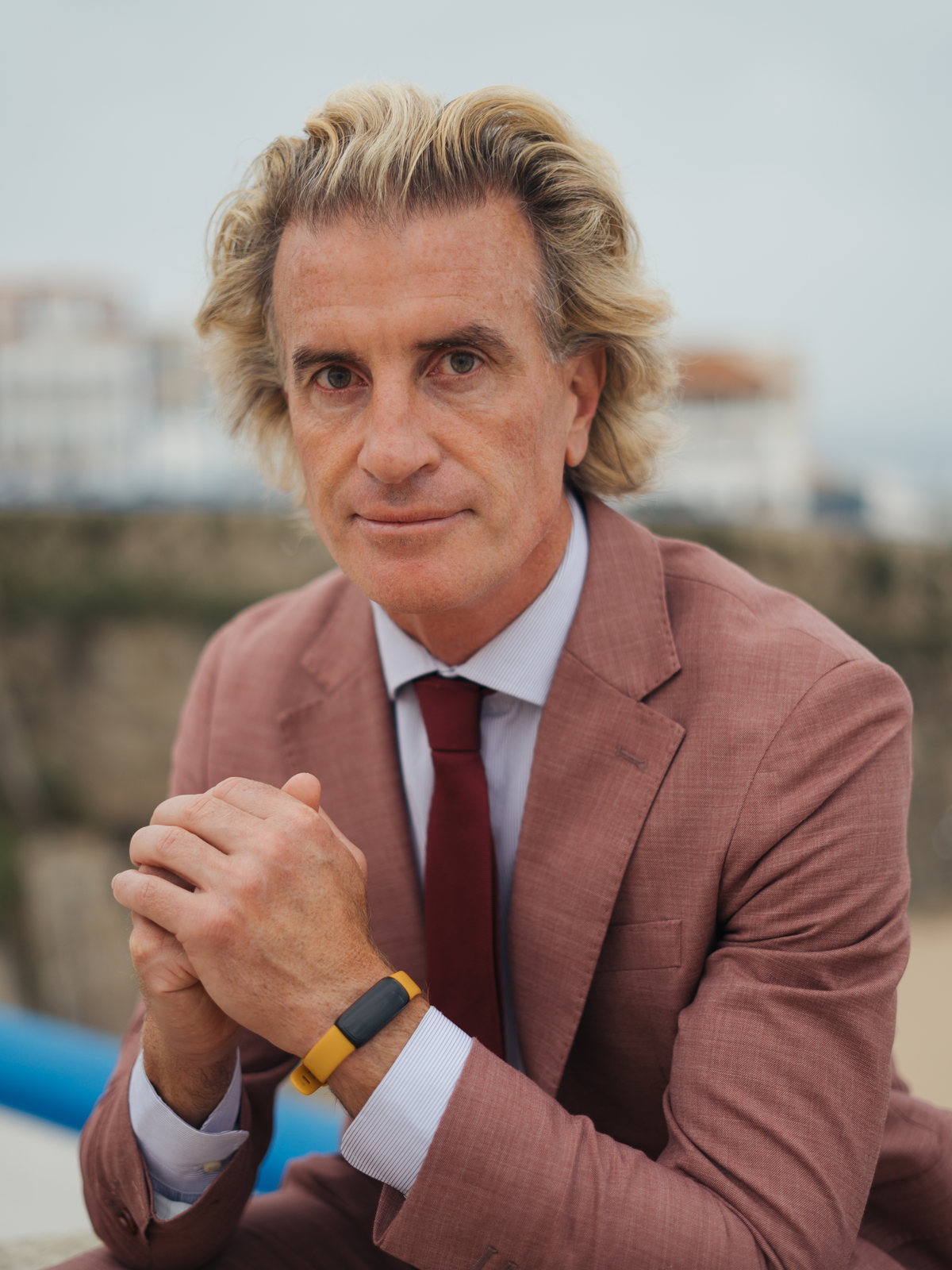
Your matter is handled and signed off personally by Colin Carroll — a dual-qualified solicitor, admitted in both England and Ireland, who has lived and worked on the European continent for twenty-five years. Today he is the registered, insured lawyer with the Ilustre Colegio de Abogados (the Spanish Bar) and the bars of Portugal, Italy and France, under EU Directive 98/5/EC, with professional-indemnity insurance in each country of practice. He works in English and speaks fluent Spanish, French, Portuguese and German.
Common questions
Is there probate in Spain?
No — Spain has no probate in the English sense and no executor. The heirs accept and adjudicate the inheritance (la aceptación y adjudicación de herencia) before a notario, who records it in a public deed; where there is no will, the heirs are first established by a Declaración de Herederos. We handle all of it for you.
Who inherits under Spanish law?
Spanish law protects a fixed share (the legítima) for the deceased's closest family, typically the children, and gives the surviving spouse a usufruct over part of the estate. Under the EU Succession Regulation (Brussels IV) you can usually elect the law of your nationality — for example English law — by a clause in your will, which restores testamentary freedom.
Do I have to travel to Spain to deal with the estate?
No. We act for you under a power of attorney and handle the whole Spanish side remotely, in plain English.
What does it cost?
A fixed fee agreed in writing before we start: from €4,500 to transfer a Spanish property, €5,250 to settle a Spanish estate, and €7,500–€9,500 for a cross-border estate. Standalone services are fixed too — releasing a bank account from €1,500, title registration €1,500, and selling an inherited property from €2,650.
Is there inheritance tax in Spain?
The Impuesto de Sucesiones is set regionally and varies sharply by autonomous community and relationship; many regions give large reductions for close family, but the return must still be filed. We compute, prepare and file the succession tax return as part of the work; tax back home is not ours, and we say early where an adviser at home is needed. The tax itself is never part of our fee.